Can Cordyceps cicadae be used as an alternative to Cordyceps militaris and Cordyceps sinensis? – A review
Winston Nxumaloa,b,∗,1, Ahmed Abdelfattah Elateeqa,c, Yanfang Suna,1
a College of Life Sciences and Medicine, Zhejiang Sci-Tech University, Hangzhou, 310018, China
b Department of Chemistry, University of Limpopo, Private Bag X1106, Sovenga, 0727, Polokwane, South Africa
c Horticulture Department, Faculty of Agriculture, Al-Azhar University, Nasr City, Cairo, 11651, Egypt
A R T I C L E I N F O
Keywords:
Cordyceps cicadae (Isaria cicadae)
Cordyceps militaris
Cordyceps sinensis
Entomogenous fungi
Utilization
A B S T R A C T
Ethnopharmacological relevance: Cordyceps cicadae (Mig.) Massee is one of the oldest and well-known traditional Chinese medicine (TCM), with its uses recorded as far back as the 5th century A.D. For centuries, C. cicadae has been used as food, tonic and folk medicine to treat malaria, palpitations, cancer, fever, diabetes, eye diseases,dizziness, and chronic kidney diseases. Although C. cicadae has been used as TCM for over 1600 years, it is not the most popular amongst the Cordyceps family. Cordyceps Sinensis (C. sinensis) and Cordyceps militaris (C. militaris) are the most studied and widely used, with a number of commercially available products derived from these two Cordyceps species.
Aim of the review: This review seeks to look at the research that has been conducted on C. cicadae over the past 30 years, reporting on the biological activities, development and utilization. This information was compared to that focused on C. sinensis and C. militaris.
Materials and methods: A literature search was conducted on different scientific search engines including, but not limited to “Web of Science”, “ScienceDirect” and “Google Scholar” to identify published data on C. cicadae, I.cicadae, P. cicadae, C. sinensis and C. militaris.
Results: Research conducted on C. cicadae over the past two decades have shown that it poses similar biological properties and chemical composition as C. sinensis and C. militaris. C. cicadae has been reported to grow in many geographic locations, as compared to C. sinensis, and can be artificially cultivated via different methods.
Conclusion: There exists sufficient evidence that C. cicadae has medicinal benefits and contain bioactive compounds similar to those found on C. sinensis and C. militaris. However, more research and standardization methods are still needed to directly compare C. cicadae with C. sinensis and C. militaris, in order to ascertain the suitability of C. cicadae as an alternative source of Cordyceps products.
1. Introduction
Cordyceps cicadae (Mig.) Massee is one of the oldest and well-known traditional Chinese medicine (TCM), with its uses recorded as far back as the 5th century AD (Li et al., 2019). C. cicadae is an entomogenous fungi that belongs to the Claviciptaceae family and the genus Codyceps,which grows inside the nymph of hosts e.g. Cicada flammata Distant,Platypleura kaempferi Fabricius, Crytotympana pustulata Fabricious,Platylomiapieli Kato, and Oncotympana maculatieollis Motsch, and forms fruiting bodies on the surfaces of these insects (Li et al., 2019; Li et al.,2019b; Fen et al., 2019). It is mainly distributed in Asia, especially in China and has also been reported in Europe and North America(Olatunji et al., 2016a,b). In China, the traditional name for C. cicadae is“Da Chan Hua” or simply “Chan Hua”, while scientifically it is also known as Cordyceps cicadae Shing, Isaria cicadae (I. cicadae), Paecilomyces cicadae (P. cicadae) and Cordyceps zhejiangensis (C. zhejiangensis)(Ke and Lee, 2018; Sun et al., 2017) (Fig. 1).
For centuries, C. cicadae has been used as food, tonic and folk medicine to treat malaria, palpitations, cancer, fever, diabetes, eye diseases, dizziness, and chronic kidney diseases (Hsu et al., 2015; Li et al., 2019b; Ke and Lee, 2018; Sun et al., 2017; Liu et al., 2018; Liu et al., 2018; Zha et al., 2019). During the Ming Dynasty, Shi-Zhen Li clarified in Compendium of Materia Medica that C. cicadae exhibits activities of improving eyesight, removing cloudiness of eyes, promoting eruption, dispelling wind and heat, and relieving convulsion (Hsu et al.,2015). Cheng Chen stated, during the Song Dynasty, in the Prescription of the Bureau of Taiping People’s Welfare Pharmacy (Taiping Huimin HejiJu Fang), that C. cicadae powder is specifically for treatment of acute conjunctivitis, chronic blepharitis, chronic dacryocystitis and pterygium(Hsu et al., 2015).
https://doi.org/10.1016/j.jep.2020.112879
Received 29 November 2019; Received in revised form 8 April 2020; Accepted 12 April 2020
∗ Corresponding author. College of Life Sciences and Medicine, Zhejiang Sci-Tech University, Hangzhou, 310018, China.
E-mail addresses: Winston.nxumalo@ul.ac.za (W. Nxumalo), katherineyfs@sina.com (Y. Sun).
1 The authors are co-corresponding authors.
Journal of Ethnopharmacology 257 (2020) 112879
Available online 16 April 2020
0378-8741/ © 2020 Elsevier B.V. All rights reserved.
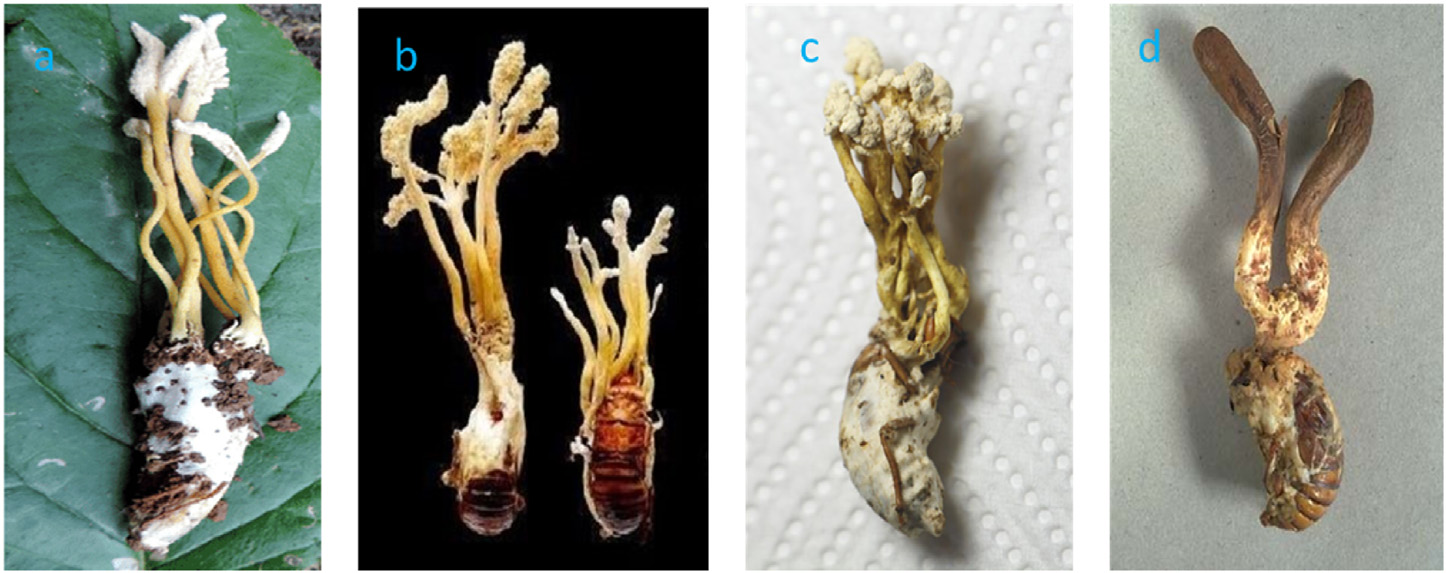
Fig. 1. Pictures of C. cicadae (a), P. cicadae, (b), I. cicadae (c) and C. zhejiangensis.
Medicinal mushrooms and plants have high nutritional value due to their high contents of proteins, fats, polysaccharides, volatile oils, carotenoids,phenolic compounds, flavonoids, vitamins and steroids(Elkhateeb et al., 2019; Mohammadhosseini et al., 2017, 2019; Wansi et al., 2018, 2019). Globally, medicinal mushrooms and plants are highly recognised as functional foods, and are available as over-the counter health supplements used in complementary and alternative medicines (Elkhateeb et al., 2019; Mohammadhosseini et al., 2017).The diversity of compounds extracted from mushrooms and plants has attracted attention as a source of novel compounds with new mode of actions against a number of diseases, and use as scaffold in designing and synthesis of new active bioactive compounds.
Although C. cicadae has been used as TCM for over 1600 years, it is not the most popular amongst the Cordyceps family. Cordyceps sinensis(C. sinensis) and Cordyceps militaris (C. militaris) are the most studied and widely used, with the former being most explored (Patterson, 2008; Olatunji et al., 2018; Zhao et al., 2014; Zhang et al., 2019a,b). In fact, of all available literature reporting on Cordyceps, C. sinensis and C. militaris accounted for 60% of the total reports. Cordyceps sinensis, the most popular amongst the Cordyceps family, has been used as TCM for over 300 years to treat diverse chronic diseases (Patterson, 2008; Olatunji et al., 2018; Zhao et al., 2014; Guo et al., 2015; Chen et al., 2018). It is known to have beneficial effects on hepatic and renal functions, and an immunomodulation-related anticancer activities. Commercial products such as “Cobrin”, “Ningxinbao”, “Golden Sun Cordyceps” and “Wanji Cordyceps” have been developed from C. sinensis (Dong et al., 2015). In China, Corbrin capsule is a national class I new drug, one of the stateprotected traditional Chinese medicines (Dong et al., 2015). The growth of C. sinensis has a very restricted habited, and its yields are decreasing each year, leading to limited resources and high prices (Zhao et al.,2014). Artificial cultivation of C. sinensis has also proven to be difficult as it also requires strict set of conditions. Cordyceps militaris has been used as tonic in China for hundreds of years, and has been reported to have similar health benefits as C. sinensis and is used as an alternative(Zhang et al., 2019a,b; Chen et al., 2018; Sun et al., 2018). C. militaris is known to grow at different regions and climates, and its cultivation has been widely explored, leading to its large scale production (Zhang et al.,2019a,b). “C. militaris mycelia powder and capsule” are commercial products used for nourishing the lung, invigorating the kidney, treating cough, asthma phlegm, amongst other diseases (Dong et al., 2015).“Cikaria” is a commercial product, derived from C. cicadae, sold as health supplement in Sweden (Scanafarma, 2020). However, the market for C. cicadae derived products in China is still very small as compared to C. sinensis and C. militaris derived products (Dong et al.,2015).
The popularity and high demand for C. sinensis and C. militaris has led to the scarcity of these TCMs, leading to their classification as protected endangered species. A number of methods have been developed for artificial cultivation and fermentation of these species in order to meet the demands.Despite the technological advances, Cordyceps are still a rare commodity, with prices for C. sinensis ranging from US$18 726 to $30 250/Kg in Lu et al. (2017) (Cunningham and Long, 2019).Research done on C. cicadae over the past two decades have shown that it poses similar biological properties and bioactive compounds as C.sinensis and C. militaris, and suggested that it can be used as an alternative source of Cordyceps. This review seeks to look at the research that has been done on C. cicadae over the past 30 years, focusing on the biological studies, chemical profile, cultivation and fermentation processes.
2. Chemical constituents and their biological activities
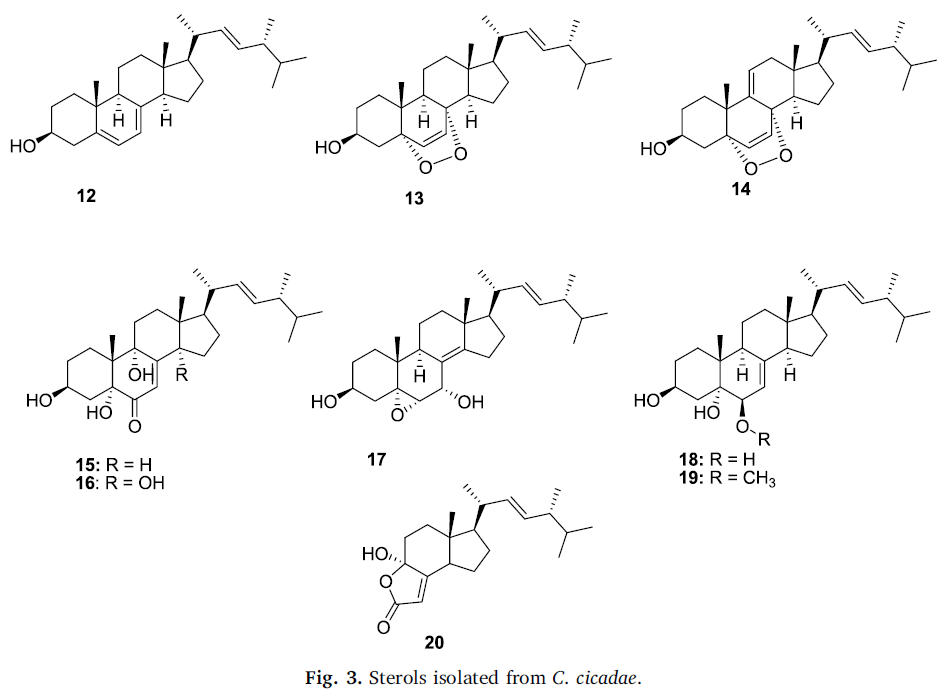
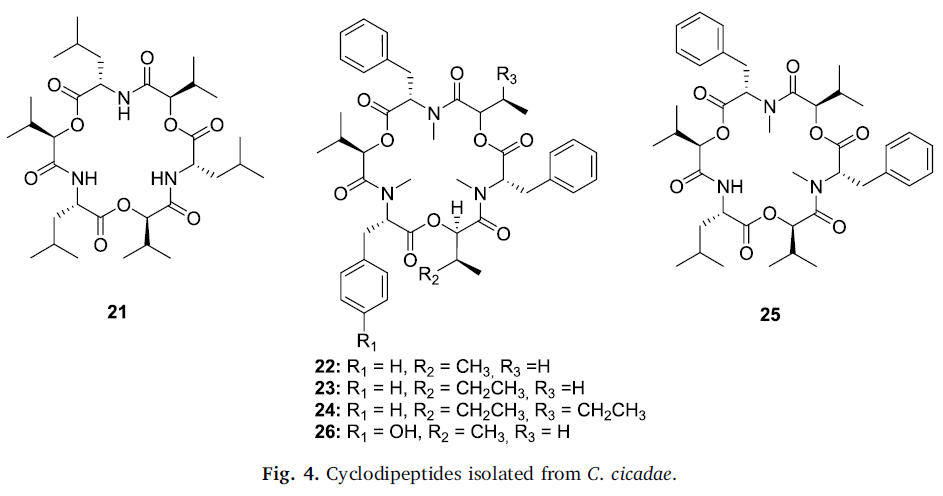
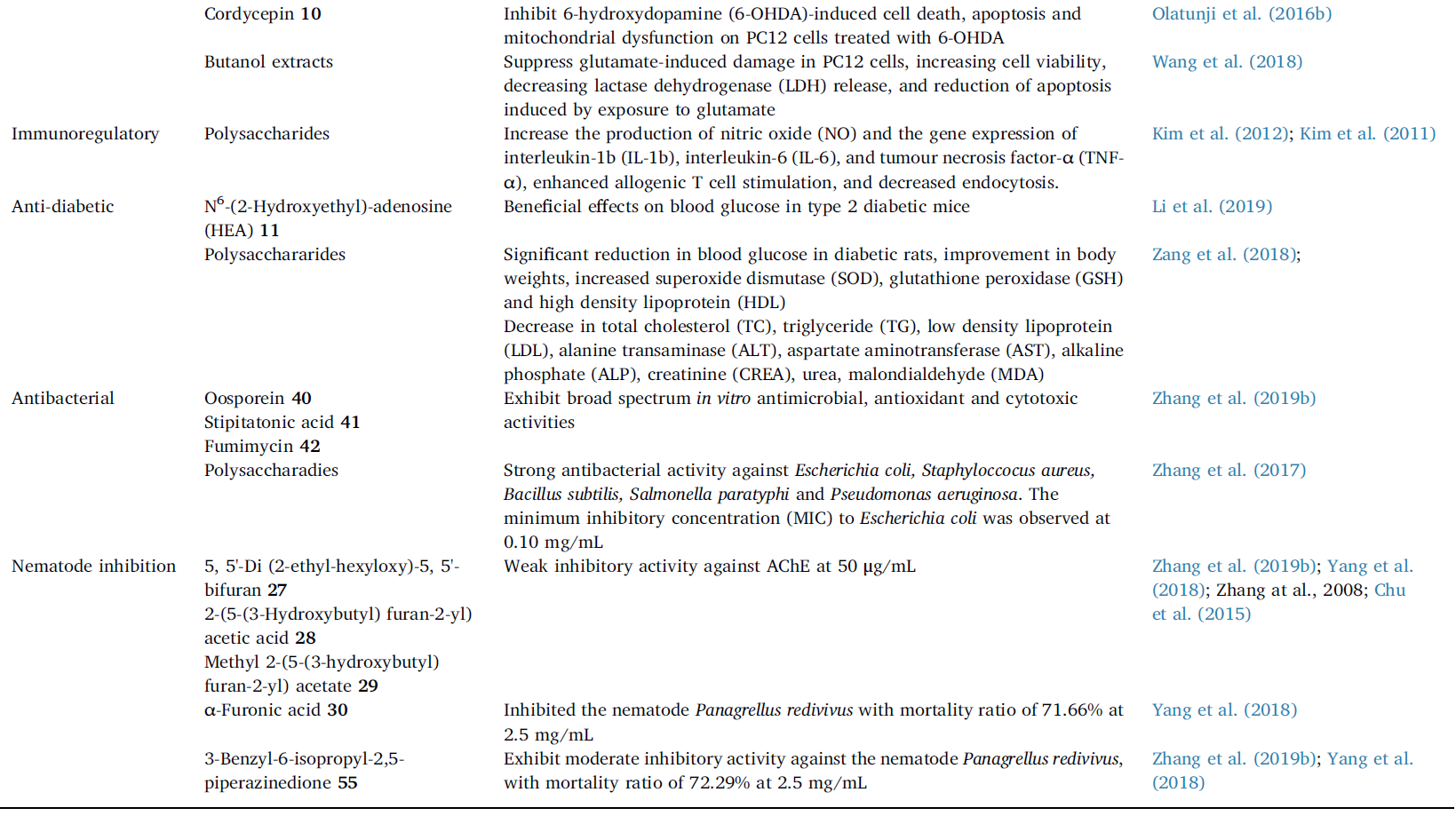
Chemicals isolated from C. cicadae include nucleosides, sterols,cyclic dipeptides, sugars, polysaccharides, fatty acids, amino acids,aromatic compounds and other small organic compounds (Sun et al.,2017; Patterson, 2008; Olatunji et al., 2018; Zhao et al., 2014; Zhang et al., 2019b). A number of these chemicals have been linked with the biological activities of C. cicadae (Figs. 2–5 and Table 1) and most of them have also been isolated from C. sinensis and C. militaris, as extensively reviewed by (Zhao et al., 2014; Zhang et al., 2019a,b; Chen et al., 2018).
2.1. Nucleosides
Nucleosides that have been isolated and characterised from C. cicadae include uracil 1, uridine 2, 2'-deoxyuridine 3, inosine 4, guanosine 5, thymidine 6, adenine 7, adenosine 8, 2'-deoxyadenosine 9,cordycepin (3'-deoxyadenosine) 10 and N6-(2-hydroxyethyl)-adenosine(HEA) 11 (Zhang et al., 2019b; Zeng et al., 2014; Sun et al., 2019; Lu et al., 2015; Olatunji et al., 2016b; Zheng et al., 2018; Taofiq et al.,2016; Wang et al., 2019). The composition of nucleosides from C. cicadae has been reported to vary from geographic locations, different populations, coremium vs sclerotium, and wild vs cultivated. Zeng et al.(2014) reported variations in nucleoside composition from ten different populations of C. cicadae and concluded that it was very similar to the composition found in C. sinensis, compared to C. militaris. In this study,cordcepin was not detected from all the species of C. cicadae analysed,however they were reported in some previously published papers (Liu et al., 2018; Sun et al., 2019; Wang et al., 2019). Biological studies on nucleosides isolated from C. cicadae have only been reported on adenosine Olatunji et al. (2016b), cordycepin (Zhang et al., 2019b; Lu et al., 2015) and N6-(2-hydroxyethyl)-adenosine (HEA) (Li et al., 2019;Lu et al., 2015; Wang et al., 2019; Zheng et al., 2018).
Adenosine 8 has been reported to be a promising potential therapeutic agent for the prevention and treatment of neurodegenerative disorders, where it was shown to increase cell viability, decrease the levels of reactive oxygen species (ROS) and Ca2+ in glutamate-PC12 cells (Olatunji et al., 2016b). Adenosine has also been reported to exhibit anti-inflammatory, anticonvulsant, neuroprotective and circulatory effects (Nakav et al., 2008; Latini and Pedata, 2001).
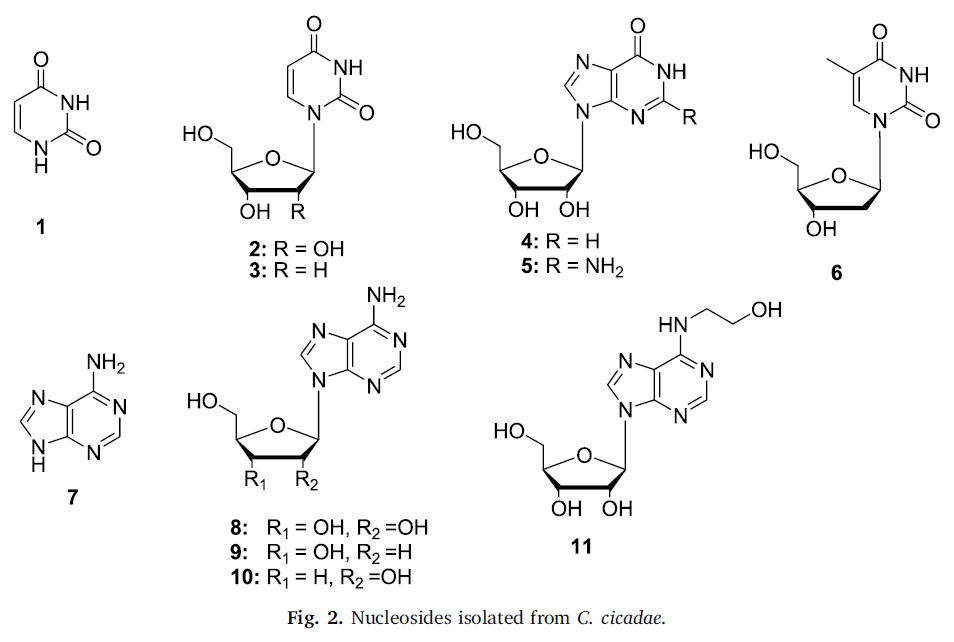
Olatunji et al. (2016b), observed cordycepin 10 to inhibit 6-hydroxydopamine(6-OHDA)-induced cell death, apoptosis and mitochondrial dysfunction on PC12 cells treated with 6-OHDA. The study also reported on the antioxidant properties of cordycepin. Cordcypein has also been reported to have multiple bioactivities such as anticancer,antimetastatic, antioxidant, antidepressant, anti-inflammatory and immunoregulation properties (Zhang et al., 2019b; Lu et al., 2015).N6-(2-hydroxyethyl)-adenosine (HEA) 11 has been reported to exhibit anti-inflammatory properties against Raw 264.7 macrophages,where it attenuated the LPS-induced proinflammatory responses by suppressing the toll-like receptor (TLR)4-mediated nuclear factor-κB (NF-κB) signaling pathway (Lu et al., 2015). The studies were also confirmed in vivo where HEA was shown to decrease unilateral ureteral obstruction (UUO)-induced inflammation and renal fibroblast activation(Zheng et al., 2018). Wang et al. (2019) reported that HEA increased the renal antioxidant level, reduced the levels of blood glucose,serum creatinine (Scr), blood urea nitrogen (BUN), urinary protein,albumin, and pro-inflammatory mediators, in diabetic rats. Beneficial effects on blood glucose in type 2 diabetic mice, after treatment with HEA, were also observed (Li et al., 2019).
2.2. Sterols
There are nine sterols that have been reportedly isolated from C.cicadae, namely; ergosterol 12, ergosterol peroxide 13, 9,11-dehydroergosterol peroxide 14, 3β,5α,9α-trihydroxy-(22E, 24R)-ergosta-7,22-dien-6-one 15, 14α-tetrahydroxy-(22E,24R)-ergosta-7,22-dien-6-one 16, 5α,6α-epoxy-(22E,24R)-ergosta-8(14),22-diene-3β,7α-diol 17,3β,5α,6β-(22E,24R)-ergosta-7,22-dien-3,5,6-triol 18, 3β,5α,6α-6-methoxyergosta-(22E,24R)-7,22-diene-3,5-diol 19 and 4-hydroxy-17R methylincisterol 20 (Wang et al., 2017; He et al., 2018; Zhu et al.,2014). Biological studies on sterols isolated from C. cicadae have only been reported on ergosterol peroxide 13, which has been shown to exhibit anti-cancer and renoprotective activities (He et al., 2018; Zhu et al., 2014). Ergosterol peroxide was reported to suppress cell growth,colonization, migration, and invasion of renal cell carcinoma (RCC) cells, in vitro (He et al., 2018). Ergosterol peroxide treatment on rat kidney fibroblast cell line (NKR-49F) attenuated TGF-β1-induced renal fibroblast proliferation, expression of cytoskeleton protein and CTGF, as well as ECM production (Zhu et al., 2014).
2.3. Cyclodipeptides
There are five reported cyclodipeptides that have been isolated from C. cicadae, namely; cordycecin A 21, beauvericin 22, beauvericin A 23,beauvericin B 24, beauvericin E 25, and beauvericin J 26 (Wang et al.,2014). The cyclodipeptides were shown to exhibit in vitro anti-cancer activity against the human liver cancer cell line (HepG2) and its multidrug resistant HepG2/ADM cells.
2.4. Other compounds
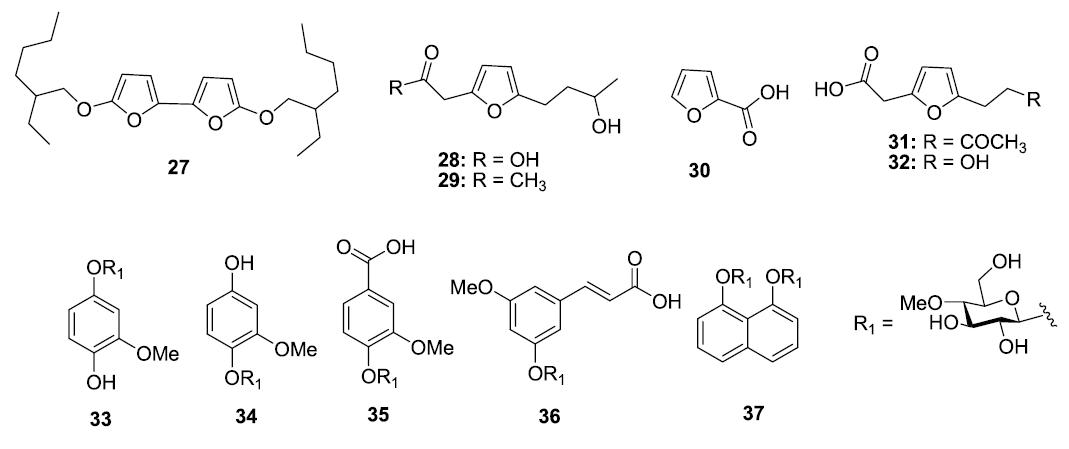
Furan containing-compounds such as 5,5'-Di-(2-ethyl-hexyloxy)-5,5'-bifuran 27, 2-(5-(3-hydroxybutyl) furan-2-yl) acetic acid 28, methyl 2-(5-(3-hydroxybutyl) furan-2-yl) acetate 29, α-furonic acid 30, 2-(5-(3-oxobutyl) furan-2-yl) acetic acid 31, 5-(2-hydroxyethyl)-2-furanacetic acid 32, have been isolated from C. cicadae (Zhang et al.,2019b; Yang et al., 2018; Zhang and Xuan et al., 2008; Chu et al.,2015). Compounds 27–30 were reported to have weak inhibitory activity against AChE at 50 μg/mL (Zhang et al., 2019b; Yang et al.,2018). α-Furonic acid also inhibited the nematode Panagrellus redivivuswith mortality ratio of 71.66% at 2.5 mg/mL (Yang et al., 2018).
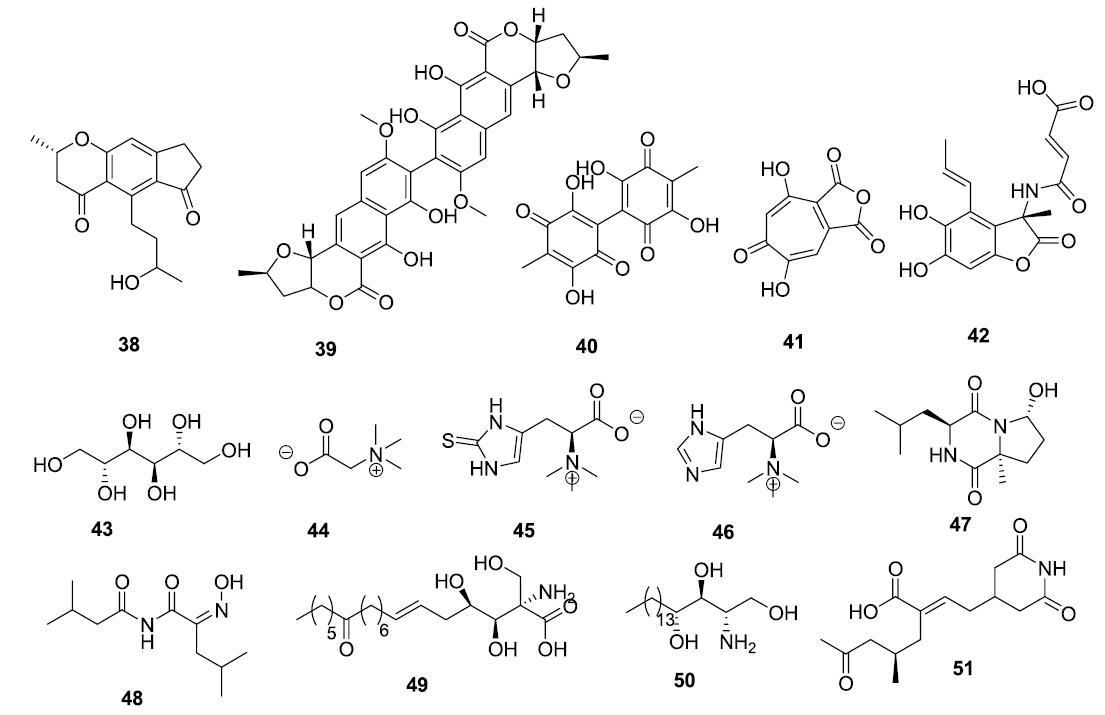
Aromatic compounds such as 3-methoxy-1,4-hydroquinone 1-(4’-Omethyl-β-glucopyranoside) 33, 2-methoxy-1,4-hydroquinone 4-(4’-Omethyl-β-glucopyranoside) 34, vanillic acid 4-(4’-O-methyl-β-glucopyranoside)35, 5-methoxycinnamic acid 3-(4’-O-methyl-β-glucopyranoside)36, naphthalene-1,8-diol 1,8-bis(4’-O-methyl-β-glucopyranoside)37, Cordycepone 38, Lichenicolin A 39, Oosporein 40 Stipitatonic acid 41 and Fumimycin 42 havealso been isolated from C. cicadae(Zhang et al., 2019b; Yang et al., 2018; Zhang and Xuan, 2007). Oosporein,Stipitatonic acid and Fumimycin have been reported to exhibit broad spectrum in vitro antimicrobial, antioxidant and cytotoxic activities (Zhang et al., 2019b). The biological activities of the otheraromatic compounds have not been reported.
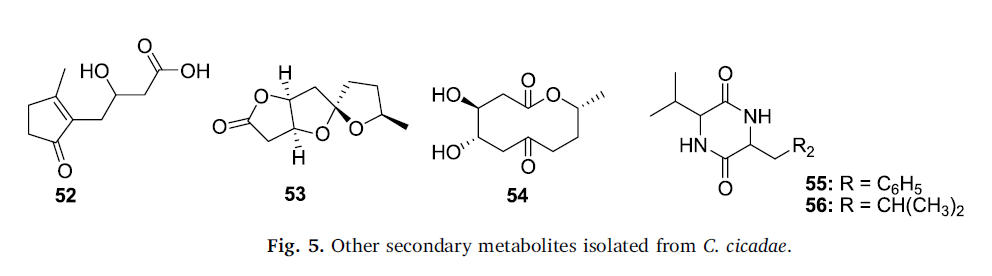
Other compounds that have been isolated from C. cicadae include cordycepic acid 43, betaine 44, hercycine 45, ergothioneine 46, cordysinin A 47,asperigilliamide 48, myriocin 49, phytosphingosine 50,cycloheximide acid A 51, 2-(3-carboxy-2-hydroxypropyl)-3-methyl-2-cyclopentenone 52, cephalosporolide E 53, cephalosporolide J 54, 3-benzyl-6-isopropyl-2,5-piperazinedione 55 and 3-isobutyl-6-isobutylpiperazine-2,5-dione 56 (Zhang et al., 2019b). Compounds 44–49 are amino acid derivatives. Cordycepic acid 43 has been reported to exhibit diuretic action and prophylaxis against postoperativeacute renal failure, relieving cough and asthma, and anti-free radical activities(Zhang et al., 2019b; Lin et al., 2016). Hercynine 45 is considered as the primer for ergothioneine 46 biosynthesis, which is a secreted antioxidant that protects cells from oxidative stress (Jeong et al., 2014).Cordycin A 47 was reported to have anti-inflammatory activity and to inhibit the proliferation of human glioma U87-MG and U251 cells (Ye et al., 2017). Asperigilliamide 48 was reported to be toxic on brine shrimp, with an IC50 value of 71.09 nM (Zhang et al., 2019b; Xu et al.,2013). Similarly, myriocin 49 was reported to be toxic with an LD50 of 5–10 and 2–5 mg/kg for mice and rats, respectively, and resulted in the death of dogs 48–72 h after they were treated by subcutaneous injection of 0.25 mg/kg, despite having good anti-fungal activity against Candida albicans (Zhang et al., 2019b; Kluepfel et al., 1972). 3-Benzyl-6-isopropyl-2,5-piperazinedione 55 was reported to exhibit moderate inhibitory activity against the nematode Panagrellus redivivus, with mortality ratio of 72.29% at 2.5 mg/mL (Zhang et al., 2019b; Yang et al.,2018).
2.5. Polysaccharides
Polysaccharides isolated form C. cicadae have been reported to have anti-diabetic, anti-bacterial, antioxidant and immunoregulatory properties(Zang et al., 2018; Lu et al., 2016; Wang et al., 2019b; Ren et al.,2014; Zhang et al., 2017; Kim et al., 2011, 2012; Xu et al., 2018; Wei et al., 2016). Crude polysaccharides from C. cicadae showed significant reduction in blood glucose in diabetic rats, improvement in body weights, increased superoxide dismutase (SOD), glutathione peroxidase (GSH) and high density lipoprotein (HDL) (Zang et al., 2018). A decrease in total cholesterol (TC), triglyceride (TG), low density lipoprotein(LDL), alanine transaminase (ALT), aspartate aminotransferase(AST), alkaline phosphate (ALP), creatinine (CREA), urea, malondialdehyde(MDA), was observed from study conducted by Zang et al. (2018).
Polysaccharides showed excellent scavenging capacities of 2,2-diphenyl-1-picrylhydrazyl (DPPH) radical, superoxide radical, hydroxyl radical and ORAC radical (Lu et al., 2016; Wang et al., 2019b; Ren et al., 2014). C. cicadae polysaccharide demonstrated strong antibacterial activity against Escherichia coli, Staphyloccocus aureus, Bacillus subtilis, Salmonella paratyphi and Pseudomonas aeruginosa. The minimum inhibitory concentration (MIC) to Escherichia coli was observed at 0.10 mg/mL (Zhang et al., 2017). An increase in the production of nitric oxide (NO) and the gene expression of interleukin-1b (IL-1b), interleukin-6 (IL-6), and tumour necrosis factor-α (TNF-α) in RAW 264.7 cells, was observed after treatment with polysaccharides from C.cicadae (Kim et al., 2012). Similarly, maturation of dendritic cells (DC) was observed after treatment with C. cicadae polysaccharides (Kim et al., 2011). Phenotypic maturation of DCs was confirmed by the elevated expressions of CD80, CD86, major histocompatibility complex (MHC)-I, and MHC-II molecules and functional maturation by increased expression of IL-12, IL-1b, and TNF-α, enhanced allogenic T cell stimulation,and decreased endocytosis (Kim et al., 2011).
2.6. Extracts
Crude extracts from C. cicadae have been reported to exhibit renoprotective, liver protective, neuroprotective and anti-cancer effects(Li et al., 2019;Ke and Lee, 2018; Sun et al., 2017; Zhu et al., 2011;Wang et al., 2018; Xie et al., 2019; Wang et al., 2014b). Extracts from C.cicadae and its anamorph, P. cicadae, exerted therapeutic effects on adenine-induced chronic renal failure (CRF) rats (Li et al., 2019). Total extracts and acetic ether extracts of C. cicadae were also shown to inhibit renal fibrosis in rats, through the transforming growth factor-β1(TGF-β1) and connective tissue growth factor (CTGF) pathway (Zhu et al., 2011).
Extracts from C. cicadae NTTU 868 mycelium prevented CCl4-induced hepatic fibrosis on BALB/c mice, through TNF-α/IL-6 pathway,TGF-β1/CTGF pathway, and anti-oxidative defense mechanism (Ke and Lee, 2018).The nucleoside N6-(2-hydroxyethyl)-adenosine (HEA) 11 was suggested as the bioactive compound responsible for this activity.
Butanol extracts of C. cicadae demonstrated neuroprotective effects by suppressing glutamate-induced damage in PC12 cells, increasing cell viability, decreasing lactase dehydrogenase (LDH) release, and reduction of apoptosis induced by exposure to glutamate (Wang et al., 2018).The butanol extract also protected cells against mitochondrial dysfunction and oxidative stress by suppressing reactive oxygen species (ROS) accumulation and up regulation of the levels of glutathione peroxidase (GSH-Px) and superoxide dismutase (SOD).
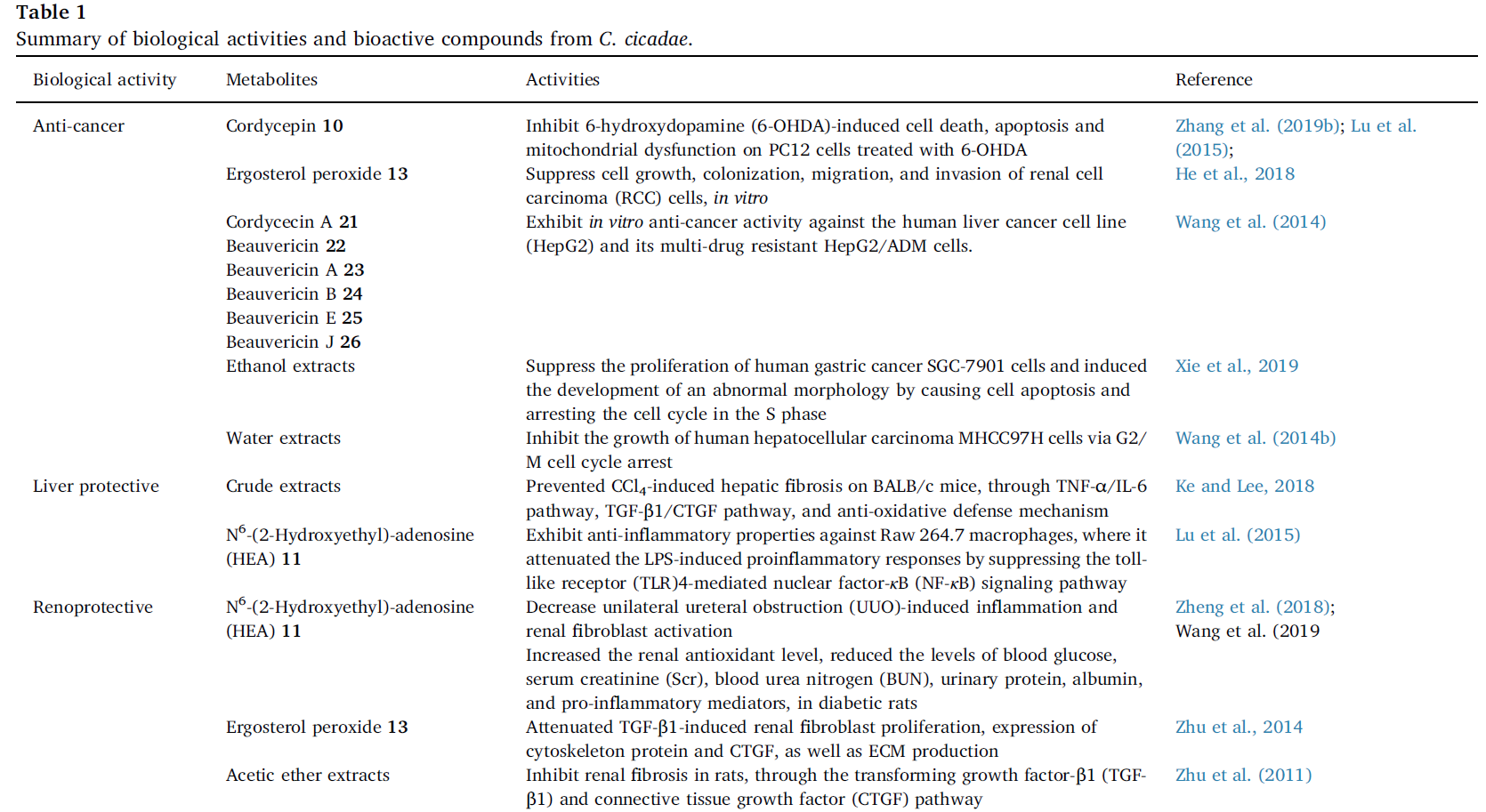
Ethanol extracts of C. cicadae suppressed the proliferation of human gastric cancer SGC-7901 cells and induced the development of an abnormal morphology by causing cell apoptosis and arresting the cell cycle in the S phase (Xie et al., 2019). Extracts from I. cicadae conidia exhibited anti-proliferativeproperties and induced apoptosis in gynaecological carcinoma MCF-7 cells (Sun et al., 2017). Water extract of C. cicadae was reported to inhibit the growth of human hepatocellular carcinoma MHCC97H cells via G2/M cell cycle arrest (Wang et al.,2014b).
3. Availability and sustainability of C. cicadae
C. cicadae has been reported to grow in many geographic locations,altitudes and different climates, similar to C. miitaris (Olatunji et al.,2016a,b; Shrestha et al., 2005; Chiu et al., 2016). Despite the relative abundance of C. cicadae over C. sinensis, it is still a rare and precious commodity, which may limit its applications on a large scale (Sun et al.,2019). A number of research groups have reported on the cultivation of C. cicadae and I. cicadae, although the studies were mainly focused on the production of certain bioactive compounds (Wang et al., 2012,2014; Zhang and Xuan, 2007; Ren et al., 2014; Cheng et al., 2012;Kunhorm et al., 2019). Ren et al. (2014) reported on the optimisation of solid-fermentation of P. cicadae, with the main focus being on the production of polysaccharide. Cheng et al. (2012) also focused on the production of polysaccharide when reporting on the optimisation of liquid-fermentation of P. cicadae. Wang et al. (2012) reported on the cultivation of C. cicadae MP12, with the main focus on production of adenosine 8 and cordycepin 10. Cultivation of Cordyceps in the production of cordycepin has been widely reported, with most of the studies conducted on C. militaris (Kunhorm et al., 2019; Adnan et al., 2017;Chiang et al., 2017; Jian and Li, 2017; Li et al., 2016; Tang et al., 2018;Shrestha et al., 2012). Liu et al. (2019) investigated the optimum cultivation conditions of I. cicadae and the production of the nucleoside,HEA 11.
4. Safety of C. cicadae
Chen at al., (2015) investigated the possible toxicity that may arise on rats, from repeated exposure to freeze-dried submerged mycelia culture of C. cicadae for 90 days. The study found no animal deaths and no treatment-related clinical signs, even at dosages of 2 g/kg on both male and female rats. The aqueous extract of wild C. cicadae fruiting bodies was found to be non-toxic to mice at a dosage of 80 g/kg, which is 444 times than the clinical daily dosage (Hsu et al., 2015; Zhang et al., 2019a,b; Song et al., 2004). Although toxic compounds such as Asperigilliamide 48, myriocin 49 and 3-Benzyl-6-isopropyl-2,5-piperazinedione 55 were reportedly isolated from C. cicadae, no significant toxicity is associated with C. cicadae.
5. Outlook and future perspectives
A patent on “Preparation and application of active ingredients and its drug combinations of C. cicadae” for the treatment of xerophthalmia,induced by physical and chemical injuries, has been filed in Taiwan,China and USA (Hsu et al., 2015). With more information available on the chemical composition, biological activities and artificial culturing technologies, more patents and products may be derived from C. cicadae.However, more research and standardization guidelines are still needed. For example, there are number methods for analysing and characterising the bioactive compounds from C. cicadae, but there are no set standards as to what constitute a good or quality product. Metabolomic variations between various strains of I. cicadae collected from different regions, various stages of development, and wild versus cultured, have been reported, which could affect the quality of products ifno standards are set (He et al., 2019). There is no information or guidelines available on what is the minimum amount of the various bioactive compounds, e.g. cordycepin, ergosterol, needed for an effective product. Cordyceps products are usually administered as capsules,sachets or powder and the dosages can range from 100 mg to 1000 mg per dosage (Elkhateeb et al., 2019; Wang et al., 2016; He et al., 2016).Moreover, biological studies where C. cicadae is directly compared with C. militaris and C. sinensis, are still lacking.
6. Conclusion
There exists sufficient evidence that C. cicadae has medicinal benefits and contain bioactive compounds similar to those found on C. sinensis and C. militaris. Compounds such as cordycepin, ergosterol peroxide,cordycecin and beauvericins were reported to exhibit anti-cancer properties against a number of cell lines. Ethanol and water extracts from C. cicadae were also reported to exhibit anti-cancer properties. N6-(2-Hydroxyethyl)-adenosine (HEA) was reported to exhibit liver protective,renoprotective and anti-diabetic properties. Adenosine, cordycepin and butanol extract of C. cicadae were reported to exhibit neuroprotective properties. Anti-bacterial and nematode inhibition activities were also reported from compounds isolated from C. cicadae.Cultivation methods for C. cicadae have been developed to meet the demands and sustainability of its uses, and can be tuned to increase the content of certain bioactives. There are no severe cytotoxic effects associated with C, cicadae, with a dosage of 80 g/kg tolerated by mice. However, more research and standardization methods are still needed to directly compare C. cicadae with C. sinensis and C. militaris, in order to ascertain the suitability of C. cicadae as an alternative source of Cordyceps products.
Declaration of competing interest
The authors declare that there is no conflict of interest.
Acknowledgments
This work was supported by grants as follows: The Public Welfare Technology Research from Science and Technology Project of Zhejiang Province (No. LGN18C030005), the Opening Project of Zhejiang Provincial Preponderant and Characteristic Subject of Key University(Traditional Chinese Pharmacology), Zhejiang Chinese Medical University (No. ZYAOX2018005), Zhejiang Sci-Tech University(2019048) and the Academication Workstation of ZhejiangProvince.W. Nxumalo is thankful to Talented Young Scientist Program, China and the National Research Foundation (South Africa) for financial support.
References
Adnan, M., Ashraf, S.A., Khan, S., Alshammari, E., Awadelkareem, A.M., 2017. Effect of pH, temperature and incubation time on cordycepin production from Cordyceps militaris using solid-state fermentation on various substrates. CyTA - J. Food 5 (4),617–621. https://doi.org/10.1080/19476337.2017.1325406.
Chen, L., Liu, Y., Guo, Q., Zheng, Q., Zhang, W., 2018. Metabolomic comparison between wild Ophiocordyceps sinensis and artificial cultured Cordyceps militaris. Biomed.Chromatogr. 32, e4279. https://doi.org/10.1002/bmc.4279.
Cheng, J-w., Wang, Y-b., He, L., Qian, H., Fu, L-z., Li, H-b., 2012. Optimization of fermentation process for the production of intracellular polysaccharide from Paecilomyces cicadae and the immuno-stimulating activity of intracellular Polysaccharide. World J. Microbiol. Biotechnol. 28, 3293–3299. https://doi.org/10.1007/s11274-012-1140-0.
Chiang, S.S., Liang, Z.C., Wang, Y.C., Liang, C.H., 2017. Effect of light emitting diodes on the production of cordycepin, mannitol and adenosine in solid-state fermented rice by Cordyceps militaris. J. Food Compos. Anal. 60, 51–56. https://doi.org/10.1016/j.jfca.2017.03.007.
Chiu, C-p., Hwang, T-l., Chan, Y., El-Shazyl, M., Wu, T-y., Lo, I-w., Hsu, Y-m., Lai, K-h.,Hou, M-f., Yuan, S-s., Chang, F-r., Wu, Y-c., 2016. Research and development of cordyceps in taiwan. Food Sci. Hum. Wellness 5, 177–185. https://doi.org/10.1016/j.fshw. 2016.08.001.
Chu, Z.B., Chang, J., Zhu, Y., Sun, X., 2015. Chemical constituents of cordyceps cicadae.Nat. Prod. Commun. 10 (12), 2145–2146.
Cunningham, A.B., Long, X., 2019. Linking resource supplies and price drivers: lessons from Traditional Chinese Medicine (TCM) price volatility and change, 2002–2017. J.Ethnopharmacol. 229, 205–214. https://doi.org/10.1016/j.jep.2018.10.010.
Dong, C., Guo, S., Wang, W., Liu, X., 2015. Cordyceps industry in China. Mycology 6 (2),121–129. https://doi.org/10.1080/21501203.2015.1043967.
Elkhateeb, W.A., Daba, G.M., Thomas, P.W., Wen, T-c., 2019. Medicinal mushroom as a new source of natural therapeutic bioactive compounds, Egypt Phramarceut. J 18,88–101. https://doi.org/10.4103/epj.epj_17_19.
Fen, W-w., Zhang, S., Zhang, Y-j., 2019. The complete mitochondrial genome of the Chanhua fungus Isaria cicadae: a tale of intron evolution in Cordycipitaceae. Environ.Microbiol. 21 (2), 864–879. https://doi.org/10.1111/1462-2920.14522.
Guo, L-x., Xu, X-m., Liang, F-r., Yuan, J-p., Peng, J., Wu, C-f., Wang, J-h., 2015.Morphological observations and fatty acids composition of indoor-cultivated Cordyceps sinensis at a high-altitude laboratory on Sejila Mountain, Tibet. PloS One 10(5), e0126095. https://doi.org/10.1371/journal.pone.0126095.
He, L., Shi, W., Lu, X., Zhao, X., Zhang, Z., 2018. Anticancer action and mechanism of ergosterol peroxide from Paecilomyces cicadae fermentation broth. Int. J. Mol. Sci. 19,3935. https://www.mdpi.com/1422-0067/19/12/3935/pdf.
He, Y.Q., Zhang, W.C., Peng, F., Lu, R.L., Zhou, H., Bao, G.H., Wang, B., Huang, B., Li,Z.Z., Hu, F.L., 2019. Metabolomic variation in wild and cultured cordyceps and mycelia of Isaria cicadae. Biomed. Chromatogr. 33 (4), e4478. https://doi.org/10.1002/bmc.4478.
He, T., Zhao, R., Lu, Y., Li, W., Hou, X., Sun, Y., Dong, M., Chen, L., 2016. Dual- directional immunomodulatory effects of corbin capsule on autoimmune thyroid diseases.Evid. Based Complement. Alternat. Med. 1360386. https://doi.org/10.1155/2016/1360386.
Hsu, J-h., Jhou, B-y., Yeh, S-h., Chen, Y-l., Chen, C-c., 2015. Healthcare functions of Cordyceps cicadae. J. Nutr. Food Sci. 5 (6), 1000432. https://doi.org/10.4172/2155-9600.1000432.
Jeong, J.H., Cha, H.J., Ha, S.C., Rojviriya, C., Kim, Y.G., 2014. Structural insights into the histidine trimethylation activity of EgtD from Mycobacterium smegmatis. Biochem.Biophys. Res. Commun. 452 (4), 1098–1103. https://doi.org/10.1016/j.bbrc.2014.09.058.
Jian, L.R., Li, Z.F., 2017. Effect of plant growth regulator on cordycepin and adenosine production of Cordyceps militaris cultured on wheat solid substrate. Acad. J. Agric.Res. 5 (10), 279–286. https://doi.org/10.15413/ajar.2017.0138.
Ke, B.J., Lee, C., 2018. Cordyceps cicadae NTTU 868 mycelium prevents CCl4-induced hepatic fibrosis in BALB/c mice via inhibiting the expression of pro-inflammatory and pro-fibrotic cytokines. J. Funct. Foods 43, 214–223. https://doi.org/10.1016/j.jff.2018.02.010.
Kim, H.S., Kim, Y.J., Lee, H.K., Ryu, H.S., Kim, J.S., Yoon, M.J., Kan, J.S., Hong, J.T., Kim,Y., Han, S.B., 2012. Activation of macrophages by polysaccharide isolated from Paecilomyces cicadae through toll-like receptor 4. Food Chem. Toxicol. 50 (9),3190–3197. https://doi.org/10.1016/j.fct.2012.05.051.
Kim, H.S., Kim, Y.J., Ryu, H.S., Shin, B.R., Kang, J.S., Kim, H.M., Kim, Y.O., Hong, J.T.,Kim, Y., Han, S.B., 2011. Phenotypic and functional maturation of dendritic cells induced by polysaccharide isolated from Paecilomyces cicadae. J. Med. Food 14 (7/8),847–856. https://doi.org/10.1089/jmf.2011.1575.
Kluepfel, D., Bagli, J., Baker, H., Charest, M.P., Kudelski, A., 1972. Myriocin, a new antifungal antibiotic from Myriococcum albomyces. J. Antibiot. 25, 109–115. https://doi.org/10.7164/antibiotics.25.109.
Kunhorm, P., Chaicharoenaudomrung, N., Noisa, P., 2019. Enrichment of cordycepin for cosmeceutical applications: culture systems and strategies. Appl. Microbiol.Biotechnol. 103, 1681–1691. https://doi.org/10.1007/s0025.
Latini, S., Pedata, F., 2001. Adenosine in the central nervous system: release mech-anisms and extracellular concentrations. J. Neurochem. 79, 463–484. https://doi.org/10.1046/j.147-4159.2001.00607.x.
Li, I.C., Lin, S., Tsai, Y.T., Hsu, J.H., Chen, Y.L., Lin, W.H., Chen, C.C., 2019. Cordyceps cicadae mycelia and its active compound HEA exert beneficial effects on blood glucose in type 2 diabetic db/db mice. J. Sci. Food Agric. 99 (2), 606–612. https://doi.org/10.1002/jsfa.9221.
Li, L., Zhang, T., Li, C.R., Xie, L., Li, N., Hou, T.L., Wang, Y.Q., Wang, B., 2019. Potential therapeutic effects of Cordyceps cicadae and Paecilomyces cicadae on Adenine-induced chronic renal failure in rats and their phytochemical analysis. Drug Des. Dev. Ther.13, 103–117. https://doi.org/10.2147/DDDT.S180543.
Li, Y., Li, K., Mao, L., Han, X., Zhang, K., Zhao, C., Zhao, J., 2016. Cordycepin inhibits LPS-induced inflammatory and matrix degradation in the intervertebral disc. PeerJ 4,e1992. https://doi.org/10.7717/peerj.1992.
Lin, S., Liu, Z.Q., Xue, Y.P., Baker, P.J., Wu, H., Xu, F., Teng, Y.M., Brathwaite, M.E.,Zheng, Y.G., 2016. Biosynthetic pathway analysis for improving the cordycepin and cordyceptic acid production in Hirsutella sinensis. Appl. Biochem. Biotechnol. 179 (4),633–649. https://doi.org/10.1007/s12010-016-2020-0.
Liu, T.F., Liu, Z.Y., Yao, X.Y., Huang, Y., Qu, Q.S., Shi, X.S., Zhang, H.M., Shi, X.Y., 2018. Identification of cordycepin biosynthesis-related genes through de novo transcriptome assembly and analysis in Cordyceps cicadae. R. Soc. Open Sci. 5 (12),181247. https://doi.org/10.1098/rsos.181247.
Liu, K.B., Wang, F., Liu, G.J., Dong, C.H., 2019. Effect of environmental conditions on synnema formation and nucleoside production in cicada flower, Isaria cicadae(Ascomycetes). Int. J. Med. Mushrooms 21 (1), 59–69. https://doi.org/10.1615/IntJMedMushrooms.2018029506.
Lu, Y.Z., Luo, F.F., Cen, K., Xiao, G.H., Yin, Y., Li, C.R., Li, Z.Z., Zhan, S., Zhang, H.Z.,Wang, C.S., 2017. Omics data reveal the unusual asexual-fruiting nature and secondary metabolic potentials of the medicinal fungus Cordyceps cicadae. BMC Genom.18, 668. https://doi.org/10.1186/s12864-017-4060-4.
Lu, M-y., Chen, C-c., Lee, L-y., Lin, T-w., Kuo, C-f., 2015. N6-(2-Hydroxyethyl)adenosine in the medicinal mushroom Cordyceps cicadae attenuates lipopolysaccharide- stimulated pro-inflammatory responses by suppressing TLR4-Mediated NF-κB signaling pathways. J. Nat. Prod. 78, 2452–2460. https://doi.org/10.1021/acs.jnatprod.5b00573.
Lu, J., Gu, G., Hao, L., Jin, Z., Wang, X., 2016. Characterization and in vitro antioxidant Activity of a polysaccharide from Cordyceps sobolifera. J. Food Process. Preserv. 40(3), 447–452. https://doi.org/10.1111/jfpp.12622.
Mohammadhosseini, M., Venditti, A., Sarker, S.D., Nahar, L., Akbarzadeh, A., 2019. The genus Ferula: ethnobotany, phytochemistry and bioactivities – a review. Ind. Crop.Prod. 129, 350–394. https://doi.org/10.1016/j.indcrop.2018.12.012.
Mohammadhosseini, M., Sarker, S.D., Akbarzadeh, A., 2017. Chemical composition of the essential oils and extracts of Achillea species and their biological activities: a review.J. Ethnopharmacol. 199, 257–315. https://doi.org/10.1016/j.jep.2017.02.010.
Nakav, S., Chaimovitz, C., Sufaro, Y., Lewis, E.C., Shaked, G., Czeiger, D., Zlotnik, M.,Douvdevani, A., 2008. Anti-inflammatory preconditioning by agonists of adeno-sine A1 receptor. PloS One 3, e2107. https://doi.org/10.1371/journal.pone.0002107.
Olatunji, O.J., Feng, Y., Olatunji, O.O., Tang, J., Ouyang, Z., Su, Z.L., Wang, D.J., Yu, X.F.,2016a. Neuroprotective effects of adenosine isolated from Cordyceps cicadae against oxidative and ER stress damages induced by glutamate in PC12 cells. Environ.Toxicol. Pharmacol. 44, 53–61. https://doi.org/10.1016/j.etap.2016.02.009.
Olatunji, O.J., Tang, J., Tola, A., Auberon, F., Oluwaniyi, O., Ouyang, Z., 2018. The genus Cordyceps: an extensive review of its traditional uses, phytochemistry and pharmacology.Fitoterapia 129, 293–316. https://doi.org/10.1016/j.fitote.2018.05.010.
Olatunji, O.J., Feng, Y., Olatunji, O.O., Tang, J., Ouyang, Z., 2016b. Cordycepin protects PC12 cells against 6-hydroxydopamine induced neurotoxicity via its antioxidant properties. Biomed. Pharmacother. 81, 7–14. https://doi.org/10.1016/j.biopha.2016.03.009.
Patterson, R.R.M., 2008. Cordyceps – a traditional Chinese medicine and another fungal therapeutic biofactory? Phytochemistry 69, 1469–1495. https://doi.org/10.1016/j.phytochem.2008.01.027.
Ren, X., He, L., Cheng, J., Chang, J., 2014. Optimization of the solid-state fermentation and properties of a polysaccharide from Paecilomyces cicadae (Miquel) Samson and its antioxidant activities in vitro. PloS One 9 (2), e87578. https://doi.org/10.1371/journal. pone.0087578.
Scanafarma, 2020. http://www.scanfarma.se/ciakria.html accessed 27/02/2020.Shrestha, B., Han, S-k., Lee, W-h., Choi, S-k., Lee, J., J-m, 2005. Distribution and in vitro fruiting of Cordyceps militaris in Korea. MYCOBIOLOGY 33 (4), 178–181. https://doi.org/10.4489/MYCO.2005.33.4.178.
Shrestha, B., Zhang, W., Zhang, Y., Liu, X., 2012. The medicinal fungus Cordyceps miliratis: research and development. Mycol. Prog. 11 (3), 599–614. https://doi.org/10.1007/s11557-012-0825-y.
Song, J.M., Xin, J.C., Zhu, Y., Zhang, X.D., 2004. Effect of Cordyceps cicadae on the hematopoietic function and its acute toxicity test. Chin JMAP 21, 12–13.
Sun, Y-f., Sun, Y., Wang, Z-a., Han, R-l., Lu, H-f., Zhang, J-l., Liu, H-t., Wang, S-x., Wang,P., Dian, L-l., Liang, Z-s., 2017. Isaria cicadae conidia possess antiproliferative and inducing apoptosis properties in gynaecological carcinoma cells. Mycology 8 (4),327–334. https://doi.org/10.1080/21501203.2017.1386243.
Sun, H., Hu, T., Guo, Y., Liang, Y., 2018. Preservation affects the vegetative growth and fruiting body production of Cordyceps militaris. World J. Microbiol. Biotechnol. 34(11), 166. https://doi.org/10.1007/s11274-018-2550-4.
Sun, Y.F., Kmonickova, E., Han, R.L., Zhou, W., Yang, K.B., Lu, H.F., Wang, Z.Q., Zhao,H.X., Wang, H.G., 2019. Comprehensive evaluation of wild Cordyceps cicadaefrom different geographical origins by TOPSIS method based on the macroscopic infrared spectroscopy (IR) fingerprint. Spectrochim. Acta, Part A-Mol. Biomolec.Spectrosc.214, 252–260. https://doi.org/10.1016/j.saa.2019.02.031.
Tang, J., Qian, Z., Wu, H., 2018. Enhancing cordycepin production in liquid static cultivation of Cordyceps militaris by adding vegetable oils as the secondary carbon source. Bioresour. Technol. 268, 60–67. https://doi.org/10.1016/j.biortech.2018.07.128.
Taofiq, O., Martins, A., Barreiro, M.F., Ferreira, I.C.F.R., 2016. Anti-inflammatory potential of mushroom extracts and isolated metabolites. Trends Food Sci. Technol. 50,193–210. https://doi.org/10.1016/j.tifs.2016.02.005.
Wang, J.H., Zhang, Z.L., Wang, Y.Q., Yang, M., Wang, C.H., Li, X.W., Guo, Y.W., 2017.Chemical constituents from mycelia and spores of fungus cordyceps cicadae. Chin.Herb. Med. 9 (2), 188–192. https://doi.org/10.1016/S1674-6384(17)60094-7.
Wang, X., Qin, A., Xiao, F., Olatunji, O.J., Zhang, S., Pan, D., Han, W., Wang, D., Ni, Y.,2019. N6-(2-hydroxyethyl)-adenosine from Cordyceps cicadae protects against diabetic kidney disease via alleviation of oxidative stress and inflammation. J. Food Biochem. 43 (2), e12727. https://doi.org/10.1111/jfbc.12727.
Wang, J., Zhang, D.M., Jia, J.F., Peng, Q.L., Tian, H.Y., Wang, L., Ye, W.C., 2014.Cyclodepsipeptides from the ascocarps and insect-body portions of fungus Cordyceps cicadae. Fitoterapia 97, 23–27. https://doi.org/10.1016/j.fitote.2014.05.010.
Wang, D., Wang, J., Wang, D., Yu, X., Olatunji, O.J., Ouyang, Z., Wei, Y., 2018. Neuroprotective effects of butanol fraction of Cordyceps cicadae on glutamate-induced damage in PC12 cells involving oxidative toxicity. Chem. Biodivers. 15, e1700385. https://doi.org/10.1002/cbdv.201700385.
Wang, Y., He, P., He, L., Huang, Q., Cheng, J., Li, W., Liu, Y., Wei, C., 2019. Structural elucidation, antioxidant and immunomodulatory activities of a novel heteropolysaccharide from cultured Paecilomyces cicadae (Miquel.) Samson. Carbohydr. Polym. 216, 270–281. https://doi.org/10.1016/j.carbpol.2019.03.104.
Wang, H.L., Zhang, J., Sit, W.H., Lee, C.Y.J., Wan, J.M.F., 2014. Cordyceps cicadae induces G2/M cell cycle arrest in MHCC97H human hepatocellular carcinoma cells: a proteomic study. Chin. Med. 9, 15. https://doi.org/10.1186/1749-8546-9-15.
Wang, Y.J., Guo, Y.B., Zhang, L.Q., Wu, J., 2012. Characterizations of a new Cordyceps cicdae isolate and production of adenosine and cordycepin. Braz. J. Microbiol. 43 (2),449–455. https://doi.org/10.1590/S1517-83822012000200004.
Wang, N., Li, J., Huang, X., Chen, W., Chen, Y., 2016. Herbal medicine Cordyceps sinensis improves health-related quality of life in moderate-to-severe asthma. Evid. Based Complement. Alternat. Med. 6134593. https://doi.org/10.1155/2016/6134593.
Wansi, J.D., Sewald, N., Nahar, L., Martin, C., Sarker, S.D., 2018. Bioactive essential oils from the Cameroonian rain forest: a review - Part I. Trends Phytochem. Res. 2,187–234.
Wansi, J.D., Sewald, N., Nahar, L., Martin, C., Sarker, S.D., 2019. Bioactive essential oils from the Cameroonian rain forest: a review - Part II. Trends Phytochem. Res. 3, 3–52.Wei, C-y., Li, W-q., Shao, S.S., He, L., Cheng, J., Han, S., Liu, Y., 2016. Structure and chain conformation of a neutral intracellular heteropolysaccharide from mycelium of Paecilomyces cicadae. Carbohydr. Polym. 136, 728–737. https://doi.org/10.1016/j.carbpol.2015.09.088.
Xie, H., Li, X., Chen, Y., Lang, M., Shen, Z., Shi, L., 2019. Ethanolic extract of Cordyceps cicadae exerts antitumor effect on human gastric cancer SGC-7901 cells by inducing apoptosis, cell cycle arrest and endoplasmic reticulum stress. J. Ethnophamarcol.231, 230–240. https://doi.org/10.1016/j.jep.2018.11.028.
Xu, X.L., Yin, L.Y., Wang, S.Y.S., Liu, H.H., Gao, J.H., Zhao, S.J., 2013. Cycloheximide acid A, a new cycloheximide derivative from marine derived Streptomyces sp from East China sea. Record Nat. Prod. 7, 292–295.
Xu, Z.C., Yan, X.T., Song, Z.Y., Li, W., Zhao, W.B., Ma, H.H., Du, J.L., Li, S.J., Zhang, D.Y.,2018. Two heteropolysaccharides from Isaria cicadae Miguel differ in composition and potentially immunomodulatory activity. Int. J. Biol. Macromol. 117, 610–616.https://doi.org/10.1016/j.ijbiomac.2018.05.164.
Yang, N.N., Jiang, N., Ma, Q.Y., Kong, F.D., Xie, Q.Y., Zhou, L.M., Yu, Z.F., Zhao, Y.X.,2018. Chemical study of the strain Cordyceps spp. from cell fusion between Cordycepys militaris and Cordyceps cicadae. J. Asian Nat. Prod. Res. 21 (5), 449–455.https://doi.org/10.1080/10286020.2018.1451518.
Ye, X.W., Chai, W.Y., Lian, X.Y., Zhang, Z.Z., 2017. Novel propanamide analogue and antiproliferative diketopiperazines from mangrove Streptomyces sp Q24. Nat. Prod.Res. 31 (12), 1390–1396. https://doi.org/10.1080/14786419.2016.1253079.
Zang, Q., Olatunji, O.J., Chen, H., Tola, A.J., Oluwaniyi, O.O., 2018. Evaluation of the anti-diabetic activity of polysaccharide from Cordyceps cicadae in experimental diabetic rats. Chem. Biodivers. 15, e1800219. https://doi.org/10.1002/cbdv.201800219.
Zeng, W.B., Yu, H., Ge, F., Yang, J.Y., Chen, Z.H., Wang, Y.B., Dai, Y.D., Adams, A., 2014.Distribution of nucleosides in populations of cordyceps cicadae. Molecules 19 (5),6123–6141. https://doi.org/10.3390/molecules19056123.
Zha, L-s., Xia, Y-p., Jeewon, R., Zou, X., Wang, X., Boonmee, S., Eungwanichayapant,P.D., McKenzie, E.H.C., Hyde, K.D., Wen, T-c., 2019. Notes on the medicinal mushroom (Cordyceps cicadae (miq.) massee). Chiang Mai J. Sci. 46 (6), 1023–1035.
Zhang, J., Wen, C., Duan, Y., Zhang, H., Ma, H., 2019a. Advance in Cordyceps militaris(Linn) link polysaccharides: isolation, structure, and bioactivities: a review. Int. J.Biol. Macromol. 132, 906–914. https://doi.org/10.1016/j.ijbiomac.2019.04.020.
Zhang, X., Hu, Q., Weng, Q., 2019b. Secondary metabolites (SMs) of Isaria cicadae and Isaria tenuipes. RSC Adv. 9 (1), 172–184. https://doi.org/10.1039/C8RA09039D.
Zhang, S.W., Xuan, L.J., 2008. Cyclopentenone and furan derivative from the mycelia of Cordyceps cicadae. J. Antibiot. 61 (1), 43–45.
Zhang, S.W., Xuan, L.J., 2007. Five aromatics bearing a 4-O-methylglucose unit from Cordyceps cicadae. Helv. Chim. Acta 90 (2), 404–410. https://doi.org/10.1002/hlca.200790047.
Zhang, Y., Wu, Y.T., Zheng, W., Han, X.X., Jiang, Y.H., Hu, P.L., Tang, Z.X., Shi, L.E.,2017. The antibacterial activity and antibacterial mechanism of a polysaccharide from Cordyceps cicadae. J. Funct. Foods 38, 273–279. https://doi.org/10.1016/j.jff.2017.09.047.
Zhao, J., Xie, J., Wang, L.Y., Li, S.P., 2014. Advanced development in chemical analysis of Cordyceps. J.Pharm. Biomed. Anal. 87, 271–289. https://doi.org/10.1016/j.jpba.2013.04.025.
Zheng, R., Zhu, R., Li, X.L., Li, X.Y., Shen, L.L., Chen, Y., Zhong, Y.F., Deng, Y.Y., 2018.N6-(2-Hydroxyethyl) Adenosine from Cordyceps cicadae ameliorates renal interstitial fibrosis and prevents inflammation via TGF-beta 1/Smad and NF-kappa B signaling pathway. Front. Physiol. 9, 1229. https://doi.org/10.3389/fphys.2018.01229.
Zhu, R., Zheng, R., Deng, Y.Y., Chen, Y.P., Zhang, S.W., 2014. Ergosterol peroxide from Cordyceps cicadae ameliorates TGF-beta 1-induced activation of kidney fibroblasts.Phytomedicine 21 (3), 372–378. https://doi.org/10.1016/j.phymed.2013.08.022.
Zhu, R., Chen, Y-p., Deng, Y-y., Zheng, R., Zhong, Y-f., Wang, L., Du, L-p., 2011. Cordyceps cicadae extracts ameliorate renal malfunction in a remnant kidney model. J. Zhejiang Univ. - Sci. B. 12 (12), 1024–1033. https://doi.org/10.1631/jzus.B1100034.